Emergency Roof Tarping & Post-Storm Weatherproofing in Las Cruces, NM
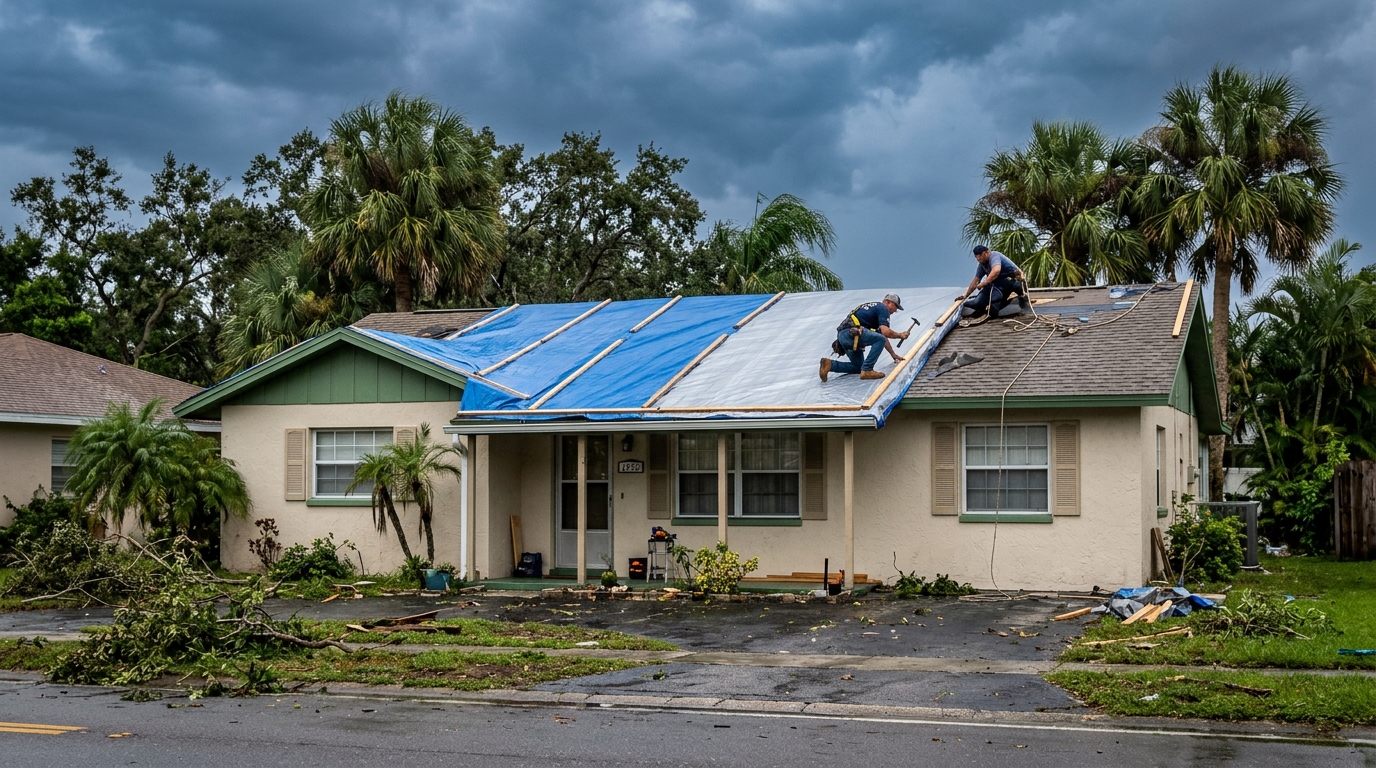
Severe high-desert windstorms cascading off the Organ Mountains and intense microburst downdrafts regularly strip asphalt shingles, dislodge heavy clay tiles, and rip low-slope membranes from commercial and residential buildings across Las Cruces. When structural decking is exposed to the elements, professional emergency tarping represents the critical first line of defense against devastating secondary water damage. Roof Expert USA routes Doña Ana County property owners to licensed independent roofing contractors equipped for rapid, engineered storm containment and immediate structural weatherproofing.
Chihuahuan Desert Microclimate Dynamics & Severe Storm Exposure
High-velocity desert wind events in the Mesilla Valley generate extreme aerodynamic uplift along roof eaves, ridges, and corners. Wind gusts exceeding 60 mph exploit loose shingle tabs and aging modified bitumen laps, peeling materials back and allowing subsequent monsoon rains to pour directly into attics and living spaces. Standard lightweight tarps secured with common nails quickly tear to shreds under relentless Chihuahuan winds, while driving nails into flat roof decks creates new penetration points that multiply leak severity. Desert grit and blowing sand also abrade exposed substrates, requiring robust physical protection until permanent restoration can be scheduled.
Non-Destructive Moisture Diagnostics & Calibrated FLIR Thermal Tracing
Prior to tarp deployment, dispatched technicians conduct comprehensive structural and substrate assessments. Using non-destructive dielectric moisture meters and high-resolution thermal imaging, crews map the extent of wet sheathing and confirm decking integrity. Technicians also evaluate parapet cap flashings, chimney crickets, and HVAC rooftop curb transitions to verify that moisture has not migrated into exterior wall framing beneath the damaged roof zone. Calibrated infrared scanning ensures that concealed moisture pockets are fully identified prior to sealing the building envelope.
Step-by-Step Substrate Restoration & Weatherproofing Methodology
Tarping engineering in Las Cruces is strictly tailored to the roof substrate. On flat Pueblo-style and low-slope commercial roofs, technicians deploy heavy-duty 12-mil woven polyethylene tarps ballasted with UV-resistant pea-gravel sandbags placed along perimeters and internal field seams—guaranteeing 100% weather protection with zero destructive nail penetrations. On sloped tile and shingle structures, tarps are wrapped around 2x4 lumber battens and mechanically anchored into rafter framing using self-sealing structural fasteners and elastomeric butyl washers, with ridge-over-peak draping preventing wind catch underneath.
Key Technical Engineering Protocols – Las Cruces
- Non-Penetrating Sandbag-Ballasted Flat Roof Containment Systems.
- Heavy-Duty 12-Mil Cross-Laminated UV-Stabilized Polyethylene Tarps.
- Rafter-Anchored Batten Installations on Steep Tile and Shingle Roofs.
- Detailed Photographic Loss Reports for Insurance Adjuster Documentation.
New Mexico Building Codes & Contractor Licensing Compliance
All dispatched contractors comply with Town of Mesilla, City of Las Cruces, and State of New Mexico building codes (NMAC 14.7.3). Technicians are registered with the New Mexico Construction Industries Division (NM CID) under classification GS-21 or GB-98, carrying mandatory commercial general liability and workers' compensation coverage. Complete photographic records, structural diagrams, and verified cause-of-loss documentation are compiled on site to support homeowner property insurance claim processing without administrative delay.
Preventative Property Maintenance & Monsoon Preparedness
Homeowners should treat emergency roof tarping as a temporary stabilization measure rather than a permanent fix. High-desert ultraviolet radiation will eventually degrade polyethylene covers over extended months. Following tarp installation, property owners should coordinate with licensed contractors for permanent substrate repair, underlayment replacement, and final tile or shingle installation before seasonal monsoon storms return, ensuring long-term structural resilience across future storm seasons.
Critical Property Owner Safety Advisory During Active Leaks
Do not climb onto a flat or sloped roof during active high-desert monsoon storms or high-velocity wind events. Standing water, wet modified bitumen membranes, and smooth clay tiles present severe slip-and-fall hazards, while lightning poses mortal risk across open roof decks. Cut electrical power to rooms with water dripping through lighting fixtures and contact our 24/7 dispatch desk immediately at (888) 208-4155.
Frequently Asked Questions
How long can an emergency roof tarp remain safely installed in Las Cruces?
Heavy-duty 12-mil UV-resistant tarps installed by professionals are engineered to protect your structure for 30 to 90 days, providing ample time to finalize insurance adjustments and schedule permanent repairs.
Will tarping a flat roof damage the underlying membrane?
No. Dispatched technicians utilize non-penetrating sandbag ballast systems on flat and low-slope roofs, securing the weather barrier without driving nails into sound membrane surfaces.
Does property insurance pay for professional emergency roof tarping?
Yes. Emergency mitigation is a mandatory policyholder obligation under standard property insurance policies to prevent additional interior loss, and costs are typically fully reimbursable.
Request Emergency Roofing Dispatch in Las Cruces
Connect directly with live emergency coordinators for rapid dispatch of licensed New Mexico roofing contractors.
DISPATCH HOTLINE: (888) 208-4155