Flat Roof Ponding Repair & Sudden Monsoon Drainage in Las Cruces, NM
Flat and low-slope roofing systems are widely favored across Las Cruces, from traditional Southwestern Pueblo homes in central neighborhoods and historic Mesilla to commercial complexes along Telshor and University. However, inadequate slope-to-drain transitions, settling roof framing, and clogged wall scuppers create chronic standing water conditions. In the Chihuahuan Desert, intense summer monsoon cloudbursts rapidly dump inches of water, transforming flat roof decks into heavy, stagnant lakes that degrade membranes and leak into building interiors. Roof Expert USA routes Doña Ana County property owners to licensed independent contractors specializing in flat roof ponding mitigation.
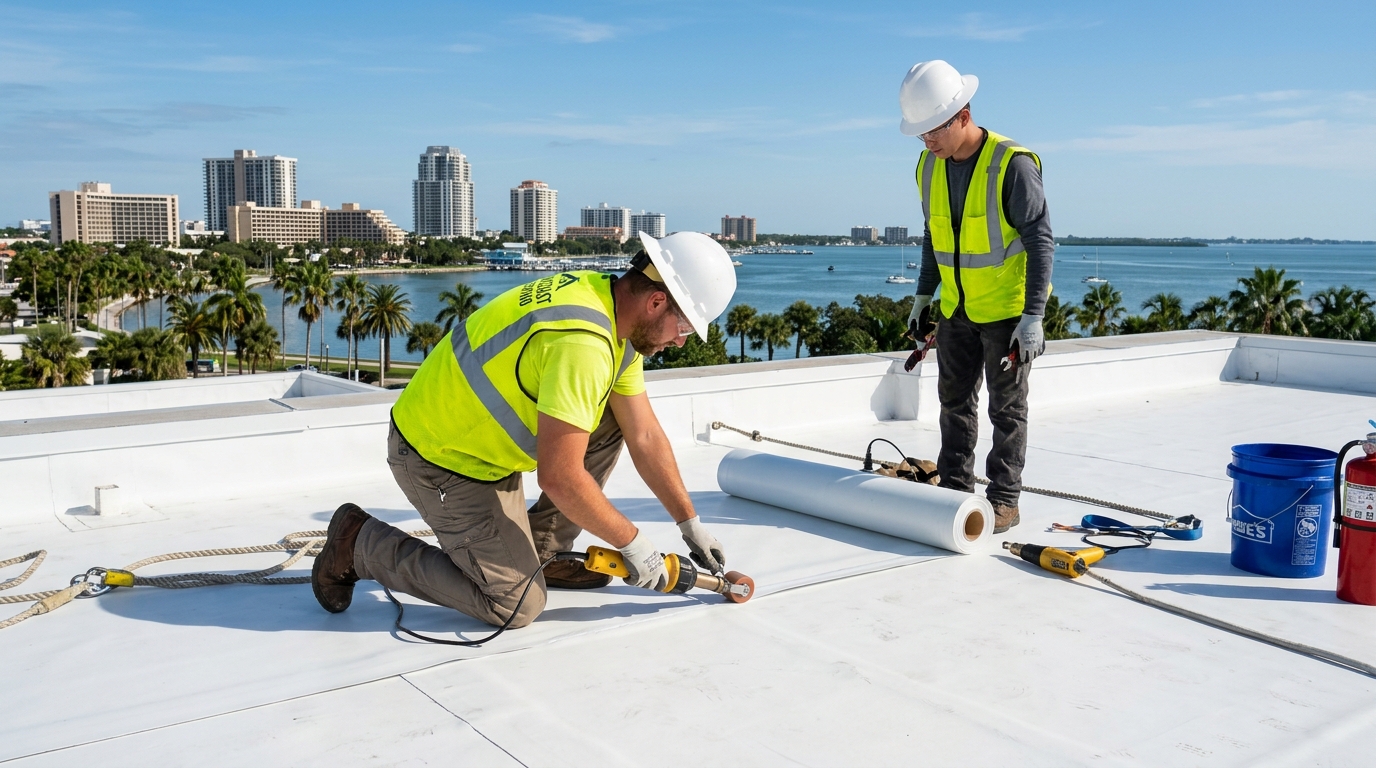
Chihuahuan Desert Microclimate Dynamics & Severe Storm Exposure
Ponding water is technically defined as moisture that remains standing on a low-slope roof surface for more than 48 hours following precipitation. Under the blazing Las Cruces sun, standing water creates a magnifying lens effect that concentrates ultraviolet rays, dramatically accelerating the breakdown of asphalt-based modified bitumen and built-up roofing membranes. Stagnant water also dissolves petroleum binders, leading to blistering, lap seam delamination, and microbial algae growth that eats away at protective granules. The excessive hydraulic weight—approximately 5.2 pounds per square foot for every inch of depth—stresses structural vigas and rafters, causing roof sagging that deepens the ponding basin.
Non-Destructive Moisture Diagnostics & Calibrated FLIR Thermal Tracing
Precision evaluation begins with hydraulic drainage and structural load calculations. Dispatched technicians utilize calibrated FLIR infrared cameras to inspect the entire ponding perimeter for moisture saturation trapped beneath the membrane. Electronic impedance meters determine whether underlying wood decking or rigid polyisocyanurate insulation has lost structural compressive strength, establishing whether drainage re-pitching or localized substrate replacement is required.
Step-by-Step Substrate Restoration & Weatherproofing Methodology
Substrate restoration involves implementing permanent drainage solutions and applying advanced elastomeric waterproof systems. Technicians install custom-tapered polyisocyanurate insulation sumps to direct water toward drainage points and enlarge through-wall canales (scuppers) with heavy-gauge galvanized or copper sleeves to increase drainage capacity. Seams and punctures are reinforced with multi-ply SBS modified bitumen base sheets. For long-term ponding protection, contractors apply 100% high-solids moisture-cured silicone roof coating systems that remain completely impervious to continuous standing water under ASTM D7281 standards.
Key Technical Engineering Protocols – Las Cruces
- Sudden Monsoon Torrent Ponding Drainage Correction & Scupper Enlargement.
- 100% High-Solids Moisture-Cured Silicone Coatings Impervious to Standing Water.
- Through-Wall Canale Reconstruction with 24-Gauge Galvanized & Copper Sleeves.
- Independent NM CID Licensed Contractors Operating 24/7 Across Doña Ana County.
New Mexico Building Codes & Contractor Licensing Compliance
All flat roof restoration projects comply with the New Mexico Commercial Building Code (NMCBC) and Residential Building Code (NMRBC) under NMAC 14.7.3. Dispatched contractors hold verified GS-21 (Roofing Specialty) or GB-98 (General Building) licenses issued by the New Mexico Construction Industries Division. All low-slope operations strictly follow OSHA safety standards, utilizing certified tie-off anchors and mobile warning lines during work on elevated commercial and residential flat decks.
Preventative Property Maintenance & Monsoon Preparedness
Property owners with flat roofs in Las Cruces should establish a routine seasonal drainage inspection schedule. Removing desert silt, tumbleweeds, and cottonwood debris from through-wall scuppers before the summer monsoon season prevents flash flooding backups that cause devastating ceiling collapses. Additionally, checking evaporative cooler overflow lines and routing drain tubes directly into scuppers prevents continuous standing puddles around cooler platforms.
Critical Property Owner Safety Advisory During Active Leaks
Do not climb onto a flat or sloped roof during active high-desert monsoon storms or high-velocity wind events. Standing water, wet modified bitumen membranes, and smooth clay tiles present severe slip-and-fall hazards, while lightning poses mortal risk across open roof decks. Cut electrical power to rooms with water dripping through lighting fixtures and contact our 24/7 dispatch desk immediately at (888) 208-4155.
Frequently Asked Questions
Why is ponding water particularly destructive to flat roofs in the desert?
Desert sun heats standing water like a magnifying lens, breaking down petroleum binders and delaminating seams. The heavy water weight also sags roof rafters, permanently worsening the drainage basin.
How do silicone roof coatings solve flat roof ponding in Las Cruces?
Unlike water-based acrylic coatings that re-emulsify and dissolve under standing water, 100% high-solids silicone is inorganic and moisture-cured, remaining permanently waterproof even under continuous ponding.
Can through-wall canales be modified to prevent monsoon overflow?
Yes. Contractors install larger-diameter scupper sleeves and tapered roof sumps that dramatically increase drainage flow rates, allowing heavy cloudbursts to exit the roof deck before ponding accumulates.
Request Emergency Roofing Dispatch in Las Cruces
Connect directly with live emergency coordinators for rapid dispatch of licensed New Mexico roofing contractors.
DISPATCH HOTLINE: (888) 208-4155